Blogs about the Sydney Millionaires Professional Hockey Club and their 1913 Challenge for the Stanley Cup.
End of Professional Hockey
The Millionaires and the Miners were able to play one more game of professional hockey. On February 7th, 1915, the final knock-out blow to professional hockey in the Maritime Provinces was dealt as small attendance brought the two team league to its knees. It was announced that both teams would be disbanding without completing the season series. The Millionaires released their players keeping them on a reserve list for the following season in a vain hope that the MPHA would return. Many of the Millionaire's imports such as Trenouthe, Maclean and Beliveau headed home and the local players played out the season as semi-pro players in Cape Breton. The Miners and the Millionaires did compete for the Douglas Trophy in a two game series made up of mostly local men, some professional and some amateur. The Miners won both games and claiming the Douglas Trophy
Professional Hockey's in an awful way
and may not weather out the storm
The Doctors don't know what to say
Oxygen or chloroform
Otto B. Kilde
This brought an end to full fledge professional hockey in the Maritimes and meant that the last Maritime team to compete for the Stanley Cup was the 1913 Sydney Millionaires.
Collapse of the New Glasgow Team
On Saturday January 30th, Sydney was set to play their next home game against New Glasgow. The New Glasgow team arrived supporting a new name. They had changed their nickname from the Black Foxes to the Bluenoses. The game itself almost ended before it began. The Sydney and New Glasgow management could not come to terms on a referee for the game and league president Curry proposed four different men and Chester Greggory turned each of them down. Du
Millionaires vs Miners - First Game Ever
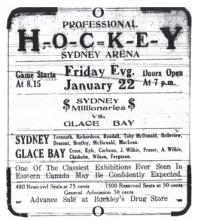
Sydney's 1915 season began in New Glasgow with a 5 to 4 loss to the Black Foxes. The Millionaires team featured many new faces along with some older ones. The new players included Roy Bentley, a local man from Sydney, Marcel Beliveau, from Moncton, New Brunswick who started the season with the Montreal Canadiens, Clarence Demont and
New Trophy - 1915 Season
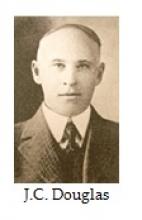
With a new 1915 Profession league in place J. J. Curry sent a request to Halifax asking that the Crosby Cup be made available for the championship of this newly created league. Once word got around the Maritimes that this request was made, there were some angry responses from interested parties who believed that the MPHA was in limbo and would be back after the war. One angry response from a Moncton paper stated, "It is time Moncton and Halifax got a move on and protested against this sort of thing. After the war is over, the MPHA will rise Phoenix-like from its ashes,. and then we will need that Crosby Cup. It is an historic mug, dear to our ears, doncher know and should not be allowed to be kicked around the bush leagues. the Eastern League, so-called is only a temporary arrangement, and will collapse like a house of cards the minute the MPHA sticks its head up again." The Cup trustees must have listened to these pleas since the Crosby Cup was never granted to the new league even though the Millionaires were the present holders. In its place John C. Douglas, former mayor of Glace Bay and future Canadian member of parliament donated a trophy named the Douglas Trophy.